Why Your Business Needs to Be Present Across the Web (Not Just on Your Website)
Having a great website used to be the finish line. In 2026, it's just the starting point.
If you're a business owner or freelancer who has invested in a professional website but still feels invisible online — or if you're wondering why your competitors keep showing up in AI answers and you don't — this is for you.
There's a fundamental shift happening in how search engines and AI tools decide which businesses to recommend. It used to be mainly about your website's content and the links pointing to it. Now, the question AI systems are asking is: how widely known, cited, and trusted is this business across the entire internet? The answer to that question determines whether you appear in AI Overviews, ChatGPT recommendations, and the growing number of AI-powered comparison tools your potential clients are already using.
The Shift From Links to Presence
Traditional SEO relied heavily on backlinks — other websites linking to yours as a vote of confidence. That still matters, but it's no longer the dominant signal. AI systems are drawing on a much broader picture: mentions in articles, appearances in directories, reviews on third-party platforms, podcast features, quotes in press pieces, and consistency of your business information across the web.
Research published in March 2026 confirms that ChatGPT alone looks at roughly six times more pages than it actually cites — and concentrates its citations among approximately 30 trusted domains per topic. To break into that circle, you don't just need a good website. You need a visible, consistent presence that shows up across multiple trusted sources.
Where Your Business Should Appear
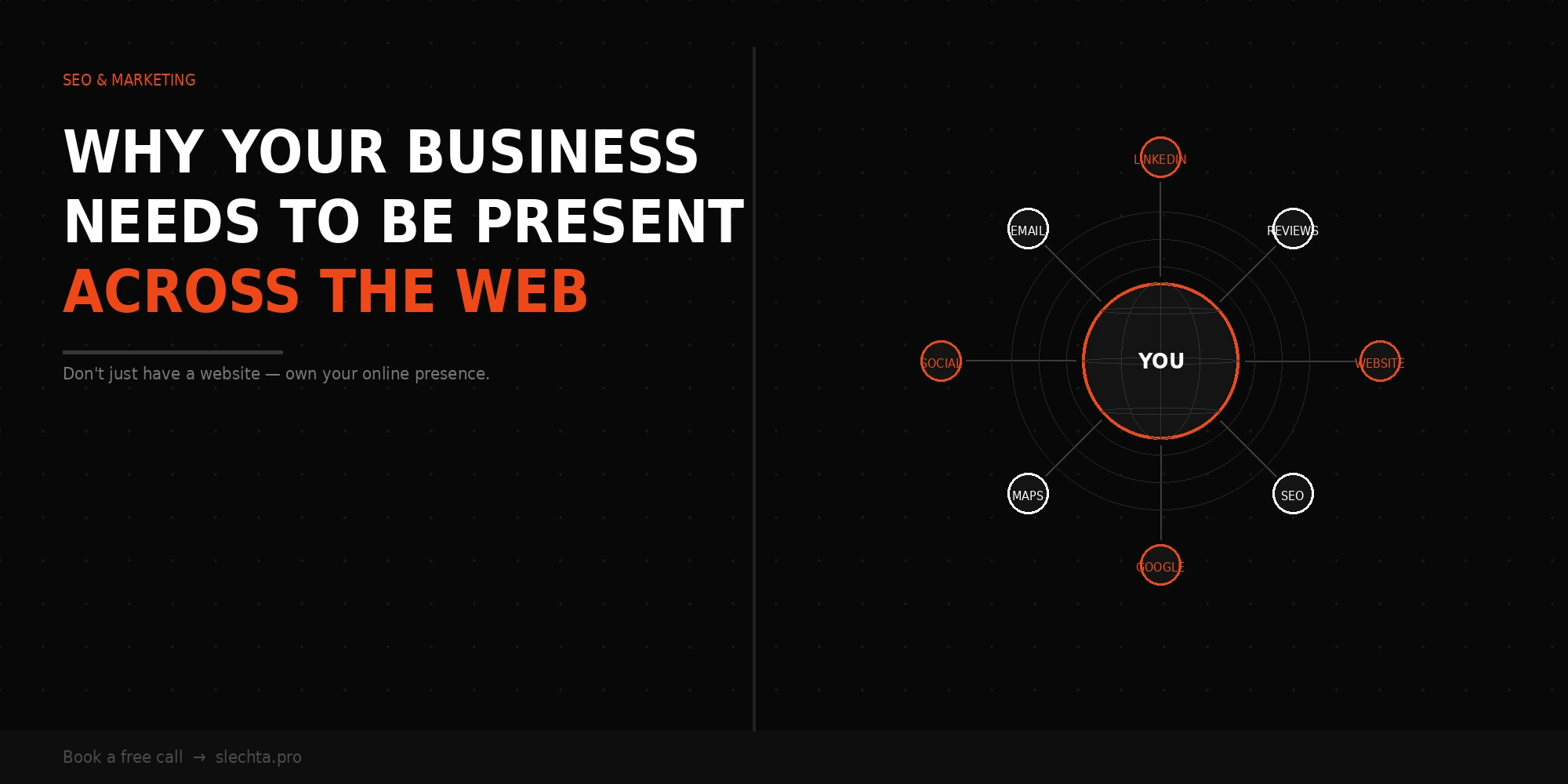
· Google Business Profile: Fully completed, with regular posts and up-to-date information. This is table stakes.
· Industry directories: Relevant directories for your sector — design portfolios, local business listings, trade associations.
· Third-party review platforms: Google Reviews, Trustpilot, or sector-specific review sites. Quantity and recency both matter.
· Media and press mentions: Local newspaper features, industry blog quotes, podcast appearances — any third-party coverage adds authority.
· LinkedIn and social: Consistent professional presence with content that positions you as a subject matter expert.
How Your Website Fits Into This
Your website is the hub that everything connects back to. It needs to be the strongest, clearest expression of what you do and why you're trusted — because every mention of your business elsewhere on the web is ultimately pointing people back to it.
That means your website needs to match the trust you're building elsewhere. If someone finds a great mention of your business in a local article, then lands on a website that looks dated, loads slowly, or doesn't clearly explain what you do — you've lost them.
In my experience working with small businesses, the websites that perform best are the ones that treat trust-building as a system: a strong website at the centre, consistent information everywhere else, and a growing footprint of mentions and reviews across the web. None of these things are overnight wins — but all of them are entirely achievable.
Start Small, Build Consistently
You don't need to overhaul everything at once. Start by making sure your Google Business Profile is complete and accurate. Then look at three or four relevant directories and ensure your name, address, and phone number are consistent across all of them. Then ask your best clients for a Google review.
Over time, look for opportunities to be quoted in articles, featured in roundups, or invited onto podcasts in your industry. These things compound. Each new mention adds a layer of credibility that AI systems notice.