Local SEO in 2026: The Biggest Opportunity Small Businesses Are Missing
If you run a local business and you're not actively investing in local SEO right now, you're leaving clients on the table — every single day.
This is for small business owners, tradespeople, consultants, and service providers who operate in a specific town, city, or region and want more clients from their local area — without spending a fortune on ads.
Local search has always been important, but something significant has shifted in 2026. AI search tools — including Google's own AI Overviews, ChatGPT, and Perplexity — now cross-reference local business information from trusted directories to confirm legitimacy before recommending a business. If your information is incomplete, inconsistent, or missing from key platforms, you're invisible to the very tools your potential clients are using to find services like yours.
Why Local SEO Is Exploding Right Now
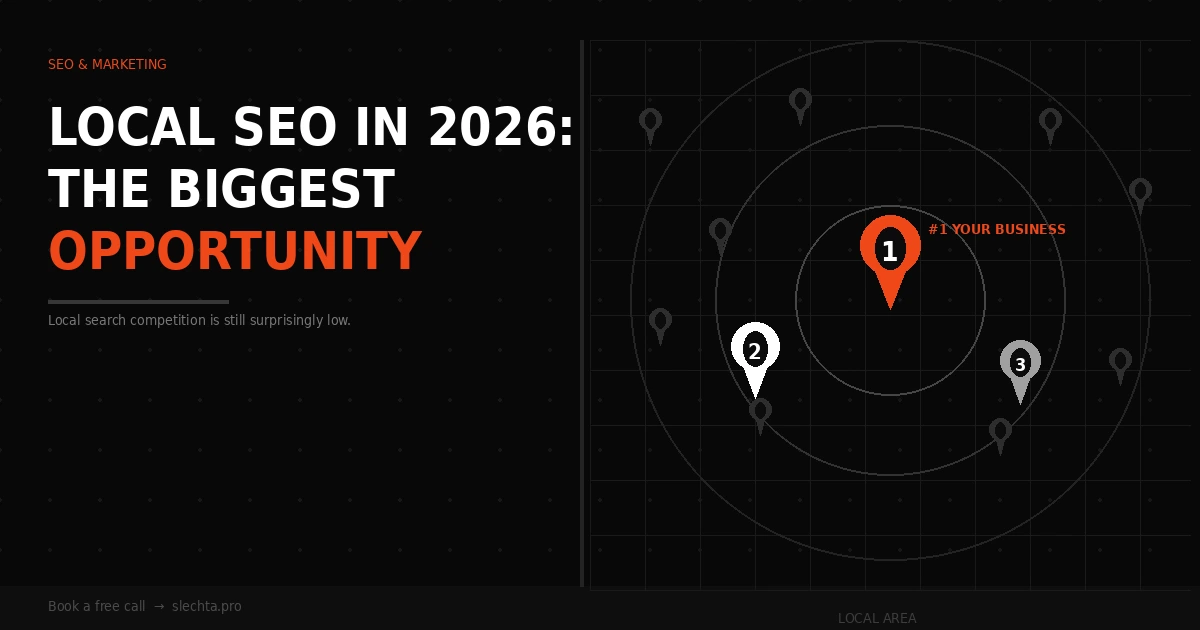
While large brands and content farms are battling over national keywords, local search is a space where a well-prepared small business can genuinely outrank companies many times its size. The competition is lower, the intent is higher (someone searching 'web designer St Albans' is much closer to buying than someone searching 'web design tips'), and the connection between local visibility and real revenue is direct and measurable.
AI systems are particularly good at local recommendations because they can cross-check your business details against multiple sources. If your Google Business Profile, your website, and your directory listings all show the same name, address, phone number, and services — AI systems treat you as verified and trustworthy. If there are inconsistencies, they quietly skip you.
The Local SEO Checklist for 2026
• Google Business Profile: Fully completed — photos, services, opening hours, description, and regular posts. This is your single most important local SEO asset.
• NAP consistency: Your Name, Address, and Phone number must be identical across your website, Google, Facebook, Yelp, Yell, Thomson Local, and anywhere else you appear.
• Location-specific website pages: If you serve multiple areas, create a dedicated page for each location with genuine, useful local content.
• Local reviews: Google Reviews are the highest priority. Aim for a minimum of 20 recent, genuine reviews. Respond to every single one.
• Local backlinks: Get featured in local press, sponsor local events, join your local Chamber of Commerce. These local signals carry significant weight.
The Website's Role in Local SEO
Your website is the anchor of your local SEO strategy. When AI tools and Google evaluate a local business, they land on your website to verify everything they've found elsewhere. If your website is slow, unclear, or doesn't mention your location, it undermines all the other work you've done.
I regularly work with local businesses whose Google Business Profile is excellent, but whose website lets them down the moment a potential client actually visits it. The fix is usually straightforward: clear location references, a fast mobile experience, a genuine testimonials section, and a prominent contact method that actually works.
The businesses I see winning locally right now have three things in common: an optimised Google Business Profile, a consistent presence across key directories, and a website that converts the traffic those sources send. If one of those three is missing, the whole system underperforms.
Start This Week
If you do nothing else after reading this, do this: go to your Google Business Profile and make sure every field is filled in. Add five recent photos. Check your opening hours. Write a 200-word business description that mentions what you do and where you do it.
That alone will put you ahead of the majority of your local competitors — most of whom have never optimised their listing at all.